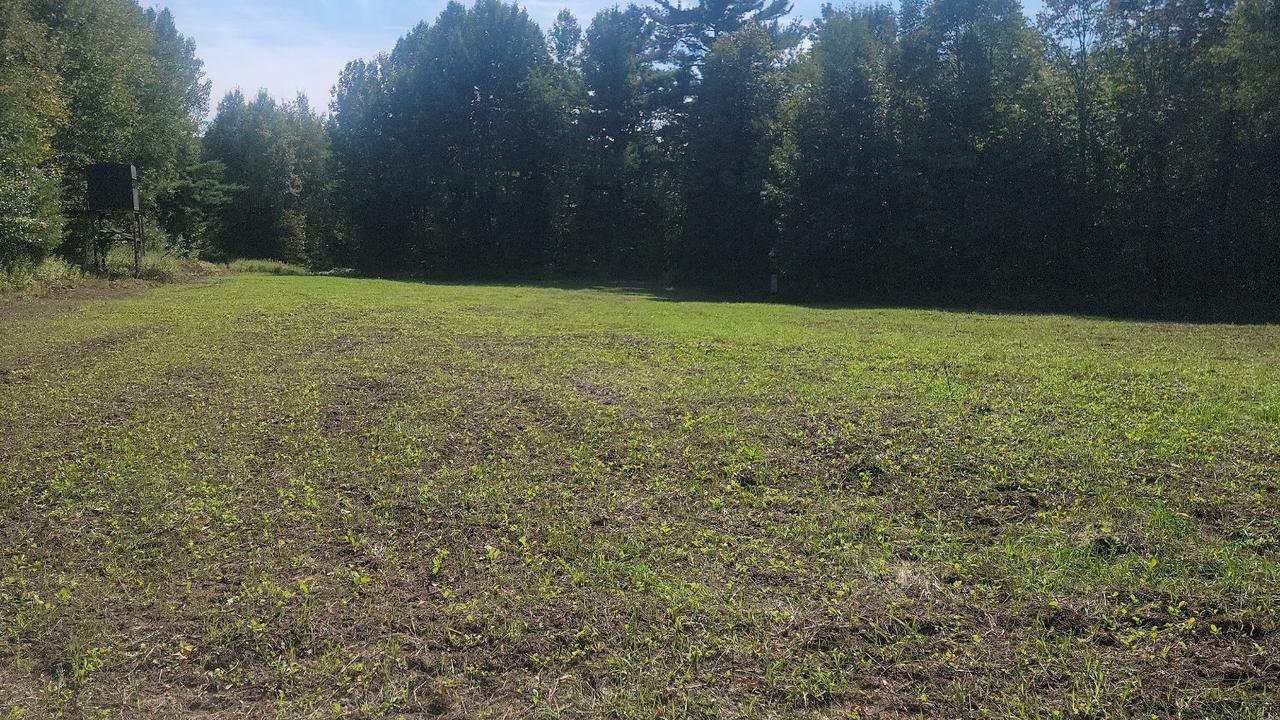
Winter Wheat Food Plots in Northern Wisconsin
Your One Stop Food Plot Shop — Fall Grain That Greens Up First in Spring
Your One Stop Food Plot Shop — Fall Grain That Greens Up First in Spring
Winter wheat is the steady fall grain of northern Wisconsin food plots. Planted in late summer to early fall, it puts down roots before freeze-up, goes dormant under snow, and is one of the first things green and growing when the snow leaves in spring — weeks before most other plot forage is worth eating. Deer feed on the tender fall growth through the hunting season, and the same stand gives early spring forage when whitetails come out of winter thin. On ground we manage — 410 acres under management — wheat is planned as part of the Full Service System, in order: (1) Mapping, (2) Clearing, (3) Blinds and Trails, (4) Food Plots. It is a food plot crop, planted in the food plot pass, after the ground has been mapped and fitted.
Wheat fits the Northwoods where fussier crops struggle. It tolerates the acidic, sandy ground common in Burnett and Washburn counties better than most grains, germinates in cooling fall soil, and handles the short season north of Highway 8 because the calendar runs on fall growth, not a long summer. Paired with the fall greens on our brassica plots page and the perennial backbone on our clover plots page, wheat rounds out a system that feeds deer from September green-up through spring.
Every step handled by our crew, in the order the ground needs it
Our crew places wheat where fall hunting pressure and spring green-up both matter: near bedding cover, along travel routes, and inside the same plot layout drawn on our food plot building page, so stands and access are planned around it.
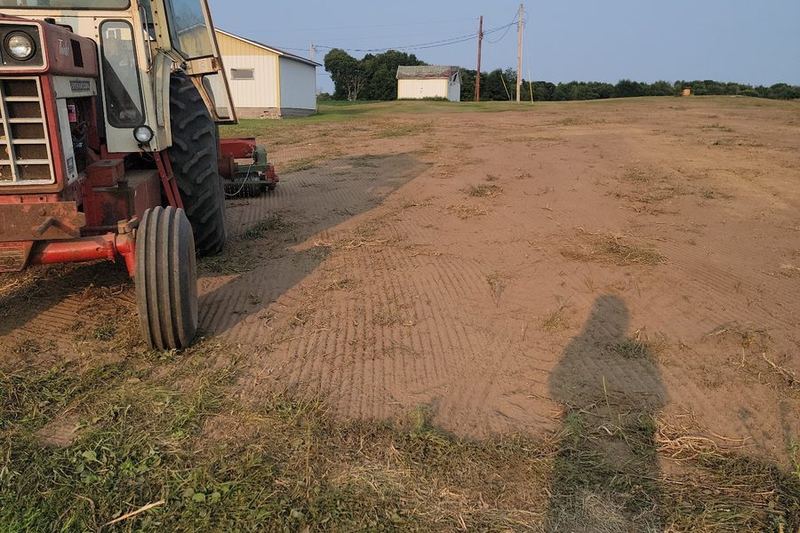
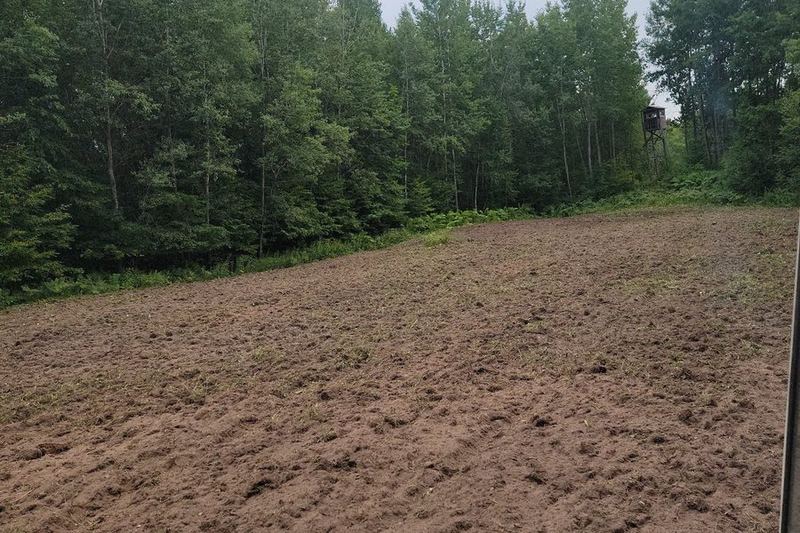
A new wheat plot on raw ground starts with excavator clearing. Clearing is excavator work only and is not part of the food plot planting pass. Then the disc pass works the ground, and planting runs as its own separate pass once the ground is fitted.
Every new plot gets sampled before planting, and the test decides what the ground needs — see our food plot soil testing page. Wheat forgives tough ground better than most crops, but it still yields on tested ground, not guesses.
In northern Wisconsin wheat goes in late summer to early fall, early enough to root and tiller before freeze-up and late enough that it does not grow rank before frost. North of Highway 8 that window is earlier and shorter, which is why the planting order is set during winter planning.
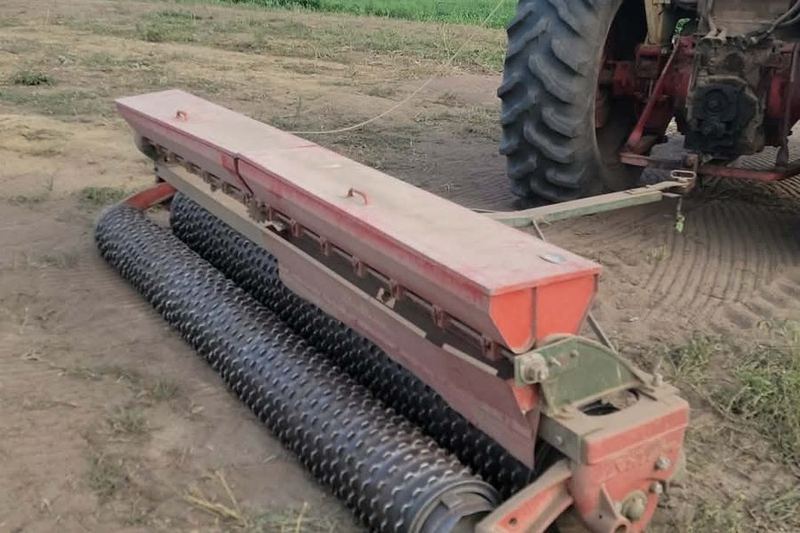
Our crew plants wheat with the Brillion, which seeds and packs in one pass. The firm, packed ground the Brillion leaves puts small grain seed at a consistent shallow depth with the soil contact fall germination needs.
Fall stands are checked for thin spots and browse pressure, and spring green-up is reviewed as part of food plot maintenance: whether the wheat carries the plot into summer or gets rotated into the next crop in the system.
Landowners ask how wheat compares with the cereal rye on our cereal rye plots page. Rye germinates colder and tolerates poorer ground; wheat is generally preferred by deer in fall and greens up with high-quality spring forage. Many Northwoods systems plant both, on different plots or in rotation, so something is feeding in every window. See our food plot services in northern Wisconsin page for the full system, and our food plot seed page for how wheat fits the planting plan alongside clover, brassicas, and standing grain.
Where we work. Our crew is based in Cumberland, in northwestern Wisconsin, and covers WI, MN and MI for the full range of land work. For full-system food plot and hunting property work, we serve landowners across northern Wisconsin, from the home counties of Barron, Polk, Burnett, and Washburn up toward Hayward and across the Northwoods, including owners who live out of state and get photos and updates from our crew as the work gets done. We do not claim a shop or crew base anywhere else; the work travels, the home base stays Cumberland.
Free estimates. Every property starts with a walk, a plan, and a free estimate. Call (715) 722-7270 and our crew will talk through your ground.
A fall grain lives or dies on timing. These are the rules that decide whether it feeds deer or just grows.
Wheat planted too late north of Highway 8 goes into winter as a sprout and heaves out in spring thaw. The fall window is set by freeze-up, not by the calendar on the seed bag.
Deer key on young, tender wheat growth in fall. A stand planted on time stays in that stage through the season instead of turning tall and stemmy before the rut.
When snow leaves a Northwoods plot, wheat is already rooted and growing while other forage is still dormant. That early spring feed is half the reason it is in the system.
Late summer to early fall, early enough for the stand to root and tiller before freeze-up. North of Highway 8 the window closes sooner, so wheat ground is fitted and planted early in the fall run, not last.
Yes. Wheat commonly rotates into an existing plot, follows a summer crop, or fills a new strip our crew clears and fits. Our crew maps it into the system first, then clears, discs, and plants it as separate passes alongside the plots already in place.
Green fall grain, worked ground, and plots that feed from September through spring green-up
Tell us about your project and we will get back to you. Free estimates, no pressure.
Based in Cumberland, serving WI, MN and MI, and landowners across northern Wisconsin, including Chippewa, Dunn, and Eau Claire Counties, for full-system food plot and hunting land work